|
|
In this Issue:
-
Calls for Urgent Action for Six on Death Row for Links
with PMOI,
Amnesty
International,
May 21, 2010
-
Human rights group condemns
political executions in Iran,
Iran Focus,
May 21, 2010
-
Death row political prisoner's son unveils
mullahs' deception,
NCRI Website, May 22, 2010
-
UN Secretary General's quarterly report to
Security Council stresses on Ashraf residents rights,
NCRI Website,
May 23, 2010
-
Pressures on incarcerated PMOI supporters and
families of Ashraf residents continue to mount,
NCRI Press Release, May 23, 2010
|
|
"Protected persons are entitled, in all circumstances, to respect for their
persons, their honour, their family rights, their religious convictions and
practices, and their manners and customs.”
Article 27 of the Fourth Geneva Convention
“In no circumstances shall a protected person be transferred to a country where
he or she may have reason to fear persecution for his or her political opinions
or religious beliefs.”
Article 45 of the Fourth Geneva Convention
|
Calls for Urgent Action for
Six on Death Row for Links with PMOI
Amnesty International
May 21, 2010
Ja’far Kazemi is now known to be among six men facing execution in Iran
for their alleged links to the banned group, the People’s Mojahedin Organization
of Iran (PMOI). In some cases, these links may amount to no more than having
contact with family members linked to the PMOI. The six could be executed at any
time.
Tehran’s prosecutor announced on 15 May that the death sentences of Ja’far
Kazemi, Mohammad Ali Haj Aghaei, Mohammad Ali Saremi (or Sarami), Abdolreza
Ghanbari (or Qanbari) and father and son, Ahmad and Mohsen Daneshpour Moghaddam,
were upheld by the Appeal Court after they were found guilty of moharebeh(enmity
against God) in relation to their alleged links to the PMOI. He also stated that
the three had asked for a pardon. Two women, Motahareh (Simin) Bahrami and
Rayhaneh Haj Ebrahim, and one other man, Hadi Gha’emi have had their death
sentences commuted to prison terms. Mohammad Amin Valian was acquitted of
moharebeh on appeal and his sentence commuted to imprisonment and payment of a
fine.
Ja’far Kazemi is also believed to have been convicted of "propaganda against the
system". He was accused of participating in mass anti-government protests in
September 2009, but not of committing any violent acts. Mohammad Ali Haj Aghaei
is thought to have faced similar charges. Mohammad Ali Saremi is believed to
have been held since 2007 after speaking at an event commemorating the summary
executions of thousands of people in Iranian prisons in 1988. He was sentenced
to death in December 2009 for allegedly being a member of the PMOI...
Read
More
Back to the Top
Human rights group condemns political executions in Iran
Iran Focus
May 21, 2010
London, May 21 - The international community should support independent voices
in Iran and "strongly condemn" the execution of political activists there, a
leading international human rights group said.
"The Iranian judiciary is a tool in the hands of Ayatollah Khamenei and
President Ahmadinejad to repress harshly peaceful protesters and political
opponents", the International Federation for Human Rights (FIDH) said in a
statement posted on its website Thursday.
The Tehran prosecutor-general Abbas Jafari Dolatabadi announced on 15 May that
death sentences pronounced against three out of 10 post-election protesters
charged with “moharebeh” (waging war on God) had been upheld by the Court of
Appeal.
Abdolreza Ghanbari, Mohsen Daneshpour Moghadam and his son Ahmad Daneshpour
Moghadam were convicted of "moharebeh" for supporting the opposition People's
Mojahedin Organisation of Iran and taking part in anti-government protests last
year.
Dolatabadi confirmed that three other Mojahedin supporters - Mohammad Ali Saremi,
Jafar Kazemi, Mohammad-Ali Haj-Aghai - also had their death sentences upheld by
the appeal court. In all, he said, 217 sentences against post-election
protesters have been confirmed by the appeal courts...
The International Solidarity for Democratic Change in Iran (ISDCI) earlier this
week published online the text of an open letter by Ali Saremi, 62, who said:
"My arrest in 2007 was for going to Khavaran cemetery, the place of burial of
victims of mass executions of 1988. But is presence at a cemetery to honour the
fallen, or supporting an organisation, or a father's visit with his son in your
view Moharebeh and worthy of the punishment of execution?"
"I say that even with my execution or hanging they cannot sow fear in my heart
or that of my noble countrymen. The only reason for such a sentence is their
fear for their shaky rule and not fairness or justice", he said...
Read More
Back to the Top
Death row political
prisoner's son unveils mullahs' deception
NCRI Website
May 22, 2010
May 19 - Voice of America interviews son of Jafar Kazemi, a political
prisoner on death row.
Voice of America (VOA) - One of the people on death row is Jafar Kazemi whose
son resides in Camp Ashraf, Iraq. Camp Ashraf residents face many problems and
we have reported on this in the past. But today, this is not our discussion. We
will now go to Mr. Behrouz Kazemi (Jafar Kazemi’s son).
VOA: Mr. Kazemi, as an Iranian who lives outside Iran and who lives in a place
like Camp Ashraf, with whatever beliefs and opinions you have, which is not what
our discussion is about, as a human being who has heard the news of your
father’s sentence, what are your feelings?
Behrouz Kazemi: When I heard of my father’s death sentence, for me as his son,
it was extremely difficult to hear that he was arrested and sentenced to death
after visiting me in Camp Ashraf. The news was very difficult for me to hear.
VOA: What is he being accused of? We hear that one of his ‘crimes’ is that he
visited you.
BK: Yes. As you know, the regime has sentenced six people to death and one of
them is Jafar Kazemi.
My father was arrested on Qods Day demonstrations. For two weeks, we did not
have any news of his situation. Eventually we found out that my father was held
in Evin prison. Approximately four months after that, in a show trial, my father
was sentenced to death. We learnt about it through his lawyer, but the sentence
was confirmed without the knowledge of his lawyer. During this time, the regime
made every effort to sentence my father to death by referring to a false case.
The only reason for my father’s death sentence is because he visited me in Camp
Ashraf two years ago. This means that the regime cannot tolerate the basic
rights of a person to visit family. For this reason, he was arrested, accused of
being Mohareb, and they issued him a death sentence. It is ridiculous that the
regime doesn’t tolerate family members visiting us in Camp Ashraf. Additionally,
it has been for more than 100 days that with the help of the Iraqi government,
the regime has brought family members of Ashraf residents [from Iran] to the
camp to psychologically torture them...
Read More
Back to the Top
UN Secretary General's quarterly report to Security
Council stresses on Ashraf residents rights
NCRI Website
May 23, 2010
NCRI – UN Secretary General in his quarterly report to the Security Council
pursuant to Resolution 1883, Ban Ki-moon, stressed the rights of residents of
Camp Ashraf, Iraq, for protection against arbitrary displacement in Iraq or
forced extradition to Iran.
In this quarterly report to the Security Council, which provides an update on UN
activities in Iraq during the months of March, April, and May 2010, the UNSG
states:
“UNAMI continues to monitor the situation in Camp Ashraf in Diyala Governorate.
… Although no significant outbreaks of violence have occurred during the
reporting period, distrust and tensions between both sides remained, with
limited cooperation regarding access to services and supplies in the camp. UNAMI,
while reiterating the right of the Government of Iraq to exercise its authority
over Camp Ashraf and the obligation of the camp’s residents to fully respect the
law and the authority of the Government of Iraq, has continued to advocate for
the residents’ unhindered access to goods and services of a humanitarian nature,
as well as for their right to be protected from arbitrary mass displacement or
forced repatriation against their will in violation of the universally accepted
principle of non-refoulement. UNAMI remains committed to assisting both parties
find an acceptable resolution to this problem.”...
Read More
Back to the Top
Pressures on incarcerated PMOI supporters and
families of Ashraf residents continue to mount
NCRI Press Release
May 23, 2010
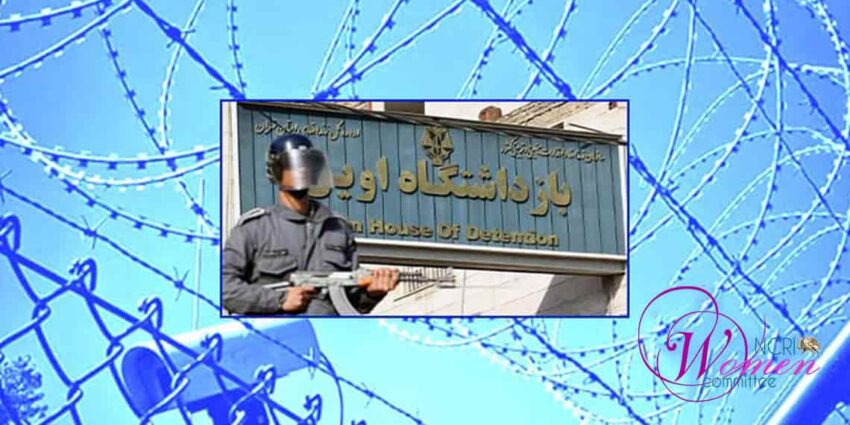
NCRI - On Wednesday, May 19, the clerical regime, during a kangaroo court, tried
Mr. Hamid Haeri, a 60-year-old political prisoner, on charges of “moharebeh”
(waging war against God), supporting the People’s Mojahedin Organization of Iran
(PMOI/MEK), persistent political activity and propaganda against the regime. He
was arrested in a raid on his house by the regime’s intelligence agents on
December 6, 2009 on charges of visiting his child and brother in Camp Ashraf,
Iraq. The raid took place while he was in bed recovering from a serious car
accident.
He was then transferred to Ward 209 of Evin prison.
The regime’s interrogators and torturers have placed Mr. Haeri under continual
physical and psychological torture, threatening him that if he refuses to comply
with their demands, they will also arrest his wife and daughter and place them
under torture.
The regime’s show trial took place even as Mr. Haeri was in critical condition
and could hardly walk. There were signs of torture evident on his face, and he
looked to be suffering from malnutrition and hunger. Having been a prisoner in
the 1980s, he is also suffering from the remaining effects of tortures from that
period as well as heart problems. He has had two heart attacks so far...
Read More
Back to the Top
Back Issues of Ashraf Monitor
|
|
Back Issues of Ashraf Monitor
|
About Humanitarian Crisis for
Iranian Dissidents and their Families in Camp Ashraf
More than 3,400 members of Iran’s
main opposition, the People’s Mojahedin (PMOI/MEK) and their families, among
them nearly 1,000 Muslim women, reside in Camp Ashraf in Iraq. The PMOI
was the source of ground breaking revelation in the United States in 2002 about
Iran’s two until-then secret nuclear sites at Natanz and Arak.
On July 28-29, 2009, Iraqi forces
ordered directly by Iraq's Prime Minister Nouri al-Maliki acting at the behest
of Iran rulers, carried out a violent, unprovoked raid on Camp Ashraf, killing
11 residents, wounding 500, and abducting 36.
The brutal raid on Ashraf was a
blatant violation of the solemn commitment Iraq had given to the United States
that it would provide "humane treatment of the Camp Ashraf residents in
accordance with Iraq’s Constitution, laws, and international obligations."
The assault took place while U.S. service members on the scene were observing
the situation closely. Regrettably they took no action to prevent the
premeditated violence despite direct appeals by Ashraf residents at the outset
and during the attack.
International Humanitarian Law Obligate U.S. to Provide Continued Protection for
Camp Ashraf Residents in Iraq
On July 2, 2004, the United States formally
recognized members of the PMOI in Camp Ashraf as “protected persons” under the
Fourth Geneva Convention.
Both the U.S. and Iraq are parties to all four
1949 Geneva Conventions.
Article 27 of the Fourth Geneva Convention specifies that:
“Protected persons are entitled, in all circumstances, to respect for their
persons, their honour, their family rights, their religious convictions and
practices, and their manners and customs […]”.
Article 45 of the Fourth Geneva Convention specifies that:
“In no circumstances shall a protected person
be transferred to a country where he or she may have reason to fear persecution
for his or her political opinions or religious beliefs.“
United States had legal and moral
obligations and responsibilities under international humanitarian law to protect
these Iranian exiles.
About
the U.S. Committee for Camp Ashraf Residents:
The U.S. Committee for Camp Ashraf
Residents (USCCAR) was established in December of 2003 by families and relatives
of residents of Camp Ashraf. The purpose of the Committee is to ensure the
safety and security of those Iranians and others living in Camp Ashraf. The
Committee will defend the proposition that the protections of the Fourth Geneva
Convention, as well as of other treaties and customary international law, must
be applied to the Iranians in Iraq. For more information please visit:
www.usccar.org
About
Ashraf Monitor
Ashraf Monitor newsletter is a
compilation of news and commentaries about the developing humanitarian
crisis for nearly 3,500 members of Iran's main opposition, the People's
Mojahedin of Iran (PMOI/MEK) in Camp Ashraf, Iraq. Ashraf Monitor is
compiled and distributed by the US Committee for Camp Ashraf Residents (USCCAR).
|
|